BIOGRAPHY
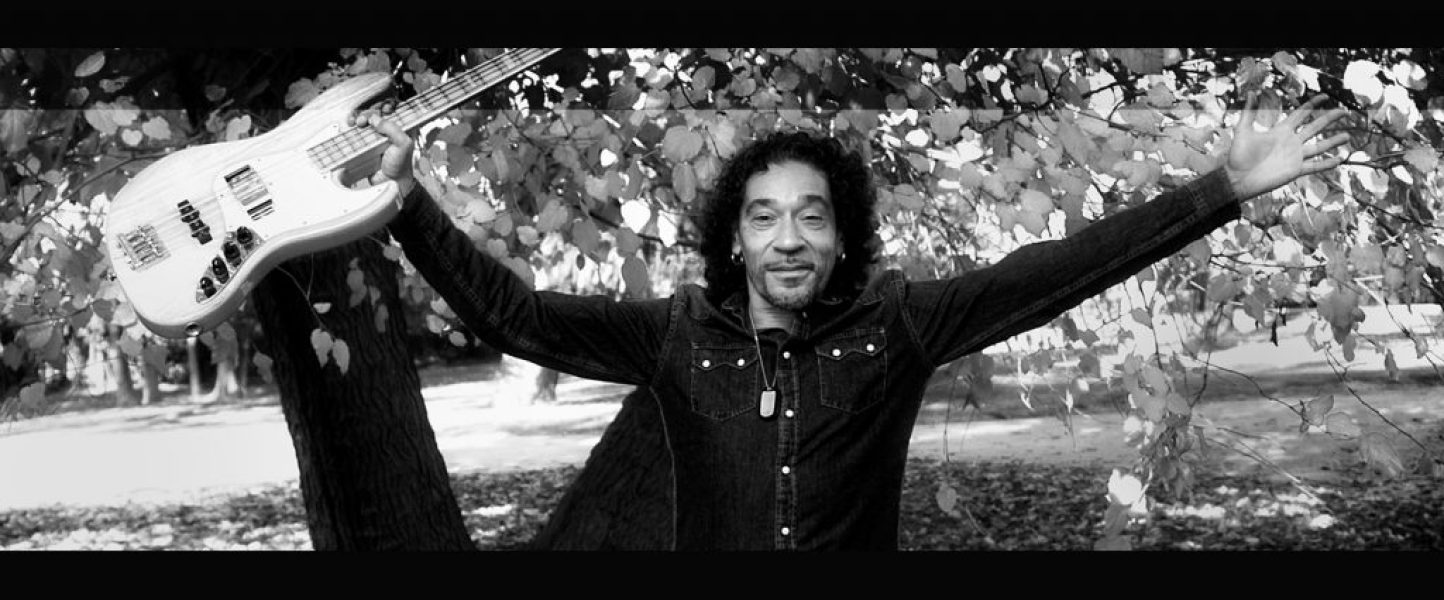
A French jazz bassist, composer, arranger, and producer, Chyco Siméon has spent more than twenty years carving out a unique niche in contemporary jazz and fusion. His playing is defined by a deep groove, melodic composition, and a freedom of improvisation that place him at the crossroads of jazz, fusion, and Caribbean music—without ever allowing himself to be pigeonholed.
Self-taught, he grew up between Montrouge, in the southern suburbs of Paris, and Martinique. His father, a music lover, passed on to him a passion that extended far beyond jazz: salsa, classical music, and Caribbean music. It was within this ocean of sound that young Chyco carved out melodic spaces that have never ceased to nourish his music.
His first musical experience took place in Martinique, while he was still in high school, with the band Sunshine, alongside Tony Chasseur, Pipo Gertrude, Eric Bonheur, and Philippe Joseph. In 1984, his career took off with the band Crystal: his first composition was a hit that received airplay. He followed that up with Quartz, then became a go-to musician in the studio, invited to participate in numerous recordings with the pioneers of Caribbean pop and jazz—Simon Jurad, Gertrude Seinin, Fal Frett, Luther François, Zaza, and Fanzi—as well as on the Hibiscus label.
Georges Debs, Kassav’s first producer, helped him establish himself as a bassist, composer, and producer. In 1990, Michel Alibo convinced him to move to Paris, where the new generation of Caribbean music was taking off. He then composed for zouk vocalists—Tatiana Miath, Tony Chasseur, and Pipo Gertrude—before branching out into funk and R&B through Serge Ponsar, in collaboration with Arnaud Aubaille and Romano Musumarra. He continued to compose and produce for Hasheem, Omar Chakil, Ashanty, G-Squad, and other artists from the Caribbean and urban scenes. In 1996, he formed his own R&B group, Washa, and released the single “Tant de Combats” on Universal Music.
For more than ten years, he divided his time between Paris and the Caribbean, handling arrangements, composition, and production for numerous artists in the pop, R&B, and Caribbean music scenes, while also working on his own songs. Those years spent in the studio and on stage gave him a deep understanding of groove, arrangement, and production—tools he later channeled into his own artistic voice.
Alongside his solo career, he continues to work in the studio as a bassist, composer, arranger, and producer for a wide variety of artists and projects: Liz McComb, Herlin Riley, Cliff Barnes, Kelyn Crapp, Keite Young, John Shannon, and many others. This session work, carried out with musicians from all walks of life, is an essential part of his practice—a realm where groove, listening, and adaptability remain central.
He released his first solo album in 2004, *Finally*, featuring Marcus Miller and Tony Chasseur, among others. The album laid the foundation for his musical style: a jazz that breathes, grooves, and improvises—and isn’t afraid to embrace its influences.
Roots Mwen (2006) explores his origins—Martinique, adolescence, and his roots. It was in the liner notes for this album that Marcus Miller coined the term “Caribbean Urban Jazz.” Ozanam (2010) is a tribute to adolescence. 99% (2013) is a socially conscious album, a cry from the heart. Simawon (2023) asserts his artistic freedom—a declaration. And Future (2025, Alcus) opens the next chapter: a jazz that is even freer, more personal, and more in tune with who he has become.
Throughout his career, he has crossed paths with Marcus Miller, Arnaud Dolmen, Jacques Schwarz-Bart, Kareen Guiock-Thuram, David Linx, Grégory Privat, and Kali—musicians who, each in their own way, have helped him expand his horizons.
Next album: 2027.